
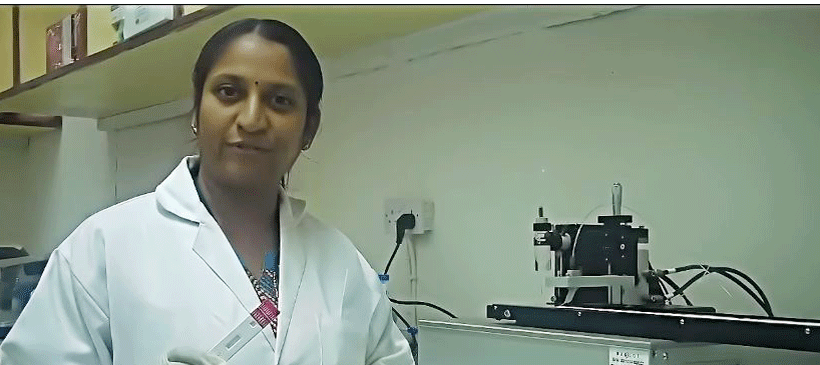
The International Crops Research Institute for the Semi-Arid-Tropics (Icrisat) in Lilongwe on Tuesday unveiled a first portable low-cost device that detects aflatoxins on location, a development which will help save lives and open export markets for crops such as groundnuts.
Icrisat has developed the device with funding from the McKnight Foundation and in collaboration with partners including the National Smallholder Farmers Association of Malawi (Nasfam), Farmers Union Malawi (FUM), Kamuzu Central Hospital and Nkhoma Hospital.
In a statement on Tuesday, Icrisat described the device as a simple nonlaboratory based kit that can be used directly by non-technical people such as farmers, agro-dealers and food processors to detect aflatoxin levels in crops such as groundnuts.
Crops such as groundnut, maize, sorghum, pearl millet, chilies, pistachios, cassava and other food products are contaminated by aflatoxin each year. They do not only affect human and livestock health but can also affect the marketability of food products. Many countries reject imports of agricultural products that exceed certain levels of aflatoxin, costing farmers millions of dollars every year.
The test device requires limited technical knowledge or training and could be used by traders to check for contamination before concluding a sale.
The rapid detection is also useful by public health authorities to help identify suspected samples in cases of an outbreak of aflatoxin poisoning.
Icrisat Malawi Scientist, Anitha Seetha, said the device will contribute to manage and reduce the entry of aflatoxins in the food value chains, improve diagnosis for local and export trade and support the food processing industry to maintain low exposure levels in food products in our local markets as well as for export markets.
The Food and Agriculture Organization (Fao) estimates that 25 percent of all crops in the world are affected by aflatoxins. The World Health Organisation (WHO) recently estimated that in 2010 around 20,000 people died globally from aflatoxin poisoning and an equal number fell ill.
Icrisat Director General, David Bergvinson, said his organisation has been working with smallholder farmers in Africa to combat the aflatoxin problem.
“This kit will enable rapid and cost-effective deployment by the government and private sector to protect public health and also improve the export prospects for African countries,” said Bergvinson.
Leave a Reply