
BY CAROLINE KANDIERO:

Small-scale farmers in vegetable and milk production sectors in Thyolo District have seen their lives transforming, thanks to Malawi Innovative Challenge Fund (MICF) co-funded projects under Roseberry Farms and Lilongwe Dairy milk centre.
This is in line with the government’s vision of turning Malawi from a net importer to an exporting nation.
The two projects have seen farmers benefitting through improved daily income and food security at household level.
Lilongwe Diary and Rosebery Farms benefitted from an MICF agri business window whereby private sector players in the country apply for grant funding for innovative inclusive business projects.
Roseberry farms
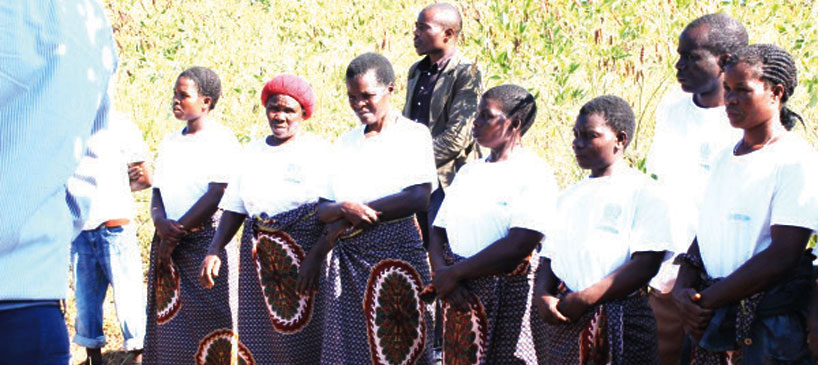
The farm comprises of a group of small scale farmers from Chinkwende Village in Traditional Authority Bvumbwe, who are managed by Ruth Kalima, Managing Director of the farm.
The farm operates under smallholder out grower model irrigation scheme, whereby farmers grow different vegetables like tomato, onions, mustard, English cucumbers and carrots
The members of the farm each have a plot and are paid on a monthly basis based on what they have produced.
Mary Mailosi is one of the group members and said since she joined the farm, her life has improved for the better.
Mailosi said she now earns more income as compared to when she was selling her vegetables at Bvumbwe market or to vendors.
“Previously, I was selling a 50 kilogramme bag of vegetables at K500 or K1,000 but, through Roseberry farms, the same bag I am able to sell at K3,000.
“This has helped to transform my life as I am able to pay school fees for my children and also provide food for my family,” she said.
On her part, Kalima said the farm has helped the farmers to improve the quality of their vegetables.
She said the group is always trained in how best to take care of the crops.
“I work hand in hand with Bvumbwe Research to provide technical assistance to the farmers and also I engage the International Labour Organisation (ILO) to assist the farmers in financial and home management trainings.
“Our aim is to produce vegetables that are of high quality and marketable at both local and international levels. Malawi has potential in agriculture but, surprisingly, it fails to export its produce especially vegetables,” Kalima said.
Lilongwe Diary Milk Centre
One of the farmers, Meria Khonje, said the coming in of the milk centre at Goliati is a positive development as farmers will now have a proper market.
She said, in the past, milk would go sour, as access to a reliable market was not there.
“This is commendable. As farmers, we are very excited with the new plant. The coming in of the plant has changed my life for the better. I was in absolute poverty but, today, I can afford a smile as I am able to put food on my table and send my children to school.
“The prices we are getting from here are much better than before and I cannot complain,” she said.
Khonje said, through the milk proceeds, she sees herself building a burned brick house roofed with iron sheets.
“I am currently living in a mud, grass thatched house but, shortly, I will build a red brick house,” Khonje said.
Lilongwe Diary Managing Director, Edwin Chilundo, said the project commenced in 2017 and has three main components which include farmer service delivery thus new innovative milk collection model, 150 milk Heifer distribution and new milk formats packed in Malawi.
He said the project involves investing in rural infrastructure, which is a donor or government domain.
“The project aims at improving smallholder farmer viability, improving efficiency of the milk bulking process and promoting viability. It also involves limited backward integration stretching competences and inducing new exposure or risk to Lilongwe Dairy,” he said.
Chilundo said the new plant utilises reduced wastage and new milk to create economies of scale.
He further said the project creates 49 jobs from wastage initiative to family size market offering and reduces exclusive country reliance on imported family packs and gives regional competitiveness and credibility.
The new plant has created over 36 jobs to date.
Government
Speaking during the launch Blantyre Agriculture Development Division Programme Manager, Eric Haraman, said milk collection for Lilongwe Diary will be at an improved and better viability supply chain.
He said over 98 percent of all milk produced in Malawi is produced by small scale farmers in rural areas of the country.
“The Southern Region happens to produce 95 percent of this production and that is why this project is being launched here today.
“Problems of Escom, technical expertise in maintaining milk infrastructure, cost of spares, aging infrastructure were most prominent before this project but this will be a thing of the past,” Haraman said.
He said Micf and Lilongwe Diary have combined to ensure that each milk day for the small scale farmer will result in a marketing opportunity that will earn the farmer money.
“The impact will be improved viability of small scale dairy farming, promoting more new farmers and a wealthier rural Malawi,” he said.
Leave a Reply