
Development partners have urged the government to increase the amount of money allocated to nutrition initiatives in the national budget.
While applauding the government for strides made in improving the nutrition status of people in recent years, Deputy Head of Development Cooperation at the Embassy of the Federal Republic of Germany, Dagmer Krenz, said having a well-nourished Malawian population will require massive investments.
“We do appreciate the positive trend of financing for nutrition in the proposed budget for 2018/19. But, with the share of 0.9 percent, Malawi still lags behind most of its neighbours, who dedicate, on average, a share of almost twice as much to nutrition,” Krenz said.
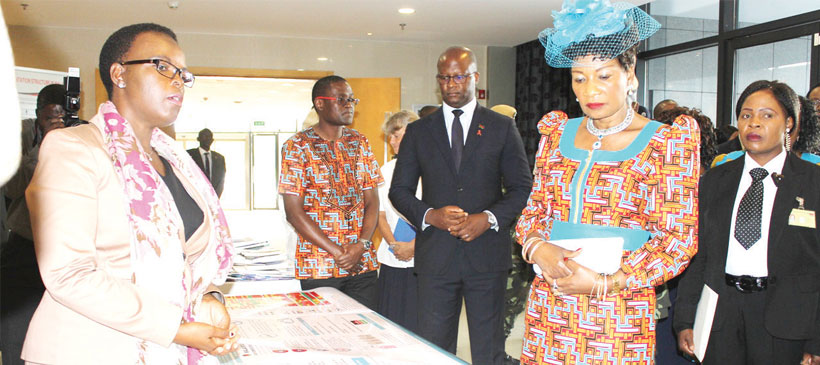
She was speaking on behalf of the development partners in Lilongwe on Wednesday, during the launch of the National Multisector Nutrition Policy and Strategic Plan, to be implemented from 2018 to 2022.
She encouraged collaboration by stakeholders as the country strives to achieve the goal of eliminating hunger and malnutrition.
“If we don’t want to leave anyone behind, an extensive and urgent response is required now. Let me assure you that development partners continue to support you on this important task and stand ready to coordinate their approaches with the government of Malawi and all stakeholders,” Krenz said.
She, however, said support from development partners will not be sufficient to reach the scale of the response needed.
Minister of Health and Population Services, Atupele Muluzi, said the government would increase funding levels to nutrition.
“In the current budget, there has been an increase in the nutrition budget. It is hoped that there will be further increases to make sure that there are further investments. We want to make sure that we implement different activities with our own resources,” Muluzi said.
First Lady Gertrude Mutharika, who presided over the launch of the policy, said it was pleasing that the policy has included issues being experienced by the country.
“I am happy that the policy I am launching today has taken into account all pertinent issues, including management of nutrition during emergency. Likewise, the double burden of nutrition is on the rise. It is quite pleasing that this policy has prioritised the prevention and management of nutrition-related non-communicable diseases,” she said.
According to the Cost of Hunger Report, the total loss due to malnutrition is 10.3 percent of Gross Domestic Product.
Some of the policy’s priority areas are prevention of undernutrition, creating an enabling environment for nutrition, nutrition during emergency situations and treatment and control of acute malnutrition.
Leave a Reply