
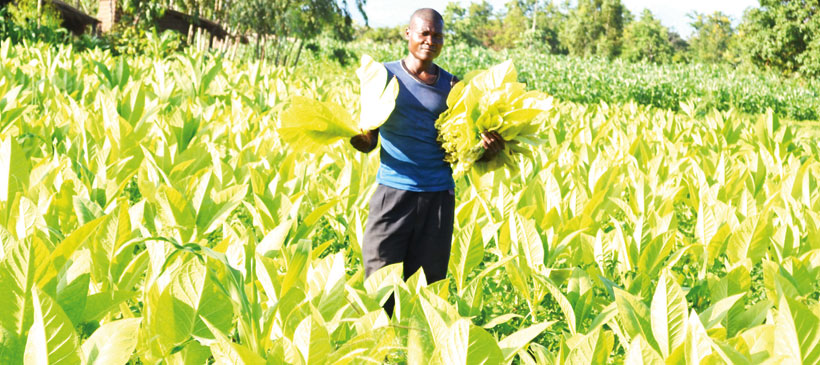

Funny Mafunga is a prosperous version of the once struggling woman people knew three years ago.
And Mafunga does not hide the source of her new-found happiness: sesame (Chitowe) farming.
A few years ago, Mafunga, 41, juggled her life between selling vegetables and experimenting with different varieties of crops.
“I was keeping eight biological children and those of relatives. Paying school fees for all of them took a financial toll on me. At the same time, I had to think of ways of survival,” Mafunga says.
Her sense of relief came when she tried sesame production as her main food and cash crop.
Sesame farming has changed her life by creating new opportunities for her. With additional resources for the family, she can afford to sit down and enjoy life.
“My life has improved a lot over the years as sesame has never let me down. Through sesame farming, I have built four houses, bought livestock, motorbikes and other household essentials,” Mafunga says.
Her children, who once faced the possibility of a bleak future, have been posted to various private schools in Malawi.
Due to the quality of her sesame, buyers from as far as Lilongwe and Mzuzu place orders with her even when the crop is still not fully developed because of the trust they have in her.
After appreciating Mafunga’s changing fortunes, other farmers in and around Nsanje District have ventured into sesame farming in the hope of emulating her success. This is now posing some challenges as the market is being flooded, driving the price of the cropdown.
But Mafunga is not fazed: “I am very confident that my crops will continue to do well. It will take some time for other farmers to get to my level, in terms of quality of my sesame crop. I am committed to beating poverty.”
According to the World Bank, 60 percent of Malawians live below the poverty line and the World Bank’s definition of poverty is “anyone living on less than one dollar a day”.
Mafunga, who employs five people to help her in her venture, says she wants people to work hard and emulate her success.
“I started sesame farming in 2012. It was a big test because I had left everything behind to start afresh on a venture that was totally new to me. But the fact that I had worked for many years with nothing to show for it made me more determined to succeed.”
With hard work and painstaking sacrifices, Mafunga expands her farmland every year in order to satisfy growing demand.
It may not be long before other farmers catch her, however, as a five-year Food For Peace Project being implemented by United in Building and Advancing Life Expectations (Ubale) organisation targets hundreds of farmers.
The project, being implemented with support from the United States Agency for International Development— in a consortium led by Catholic Relief Services— is promoting a number of interventions to boost both quality and quantity of sesame.
Elsie Mwimba, Business Development Specialist for National Cooperatives Business Association— which is under the Ubale consortium— says the consortium believes that sesame can become another foreign exchange earner, apart from tobacco and cotton.
“Since the project started, we have seen a number of farmers embarking on sesame farming. Definitely, their economic status will improve,” she says.
Mwimba says the project arose out of the realisation that sesame was not being promoted fully.
She cites lack of capital, quality seeds, organised markets, technical knowledge gaps on modern technologies limited land and climate change as some of the factors that were frustrating sesame farming.
But the project— which is being implemented in three districts of Nsanje, Chikwawa and Blantyre— seems to have changed all that.
Globally, there are an estimated 35,000 to 40,000 sesame smallholders, 70 percent of whom are estimated to be women, according to the World Food Organisation. The estimates further indicate that the global demand for the crop in 2015 was 1.4 million metric tonnes against the production of 1.7 million metric tonnes.
In Malawi, however, national sesame production for 2014/2015 growing season was estimated at 3,000 metric tonnes, of which 1,000 to 2,000 metric tonnes were estimated to be exported through traders and cotton ginners. This is according to the Ministry of Agriculture, Irrigation and Water Development.
This means markets are there, but it is quality of sesame from Malawi that may see the country upstaging international competitors.
Leave a Reply