
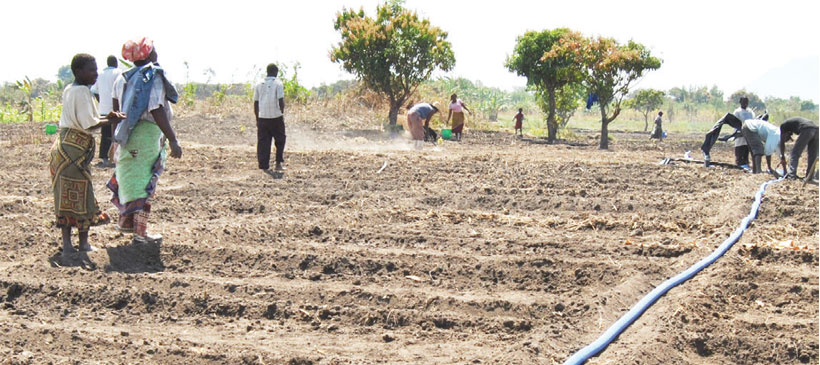
A recent study conducted by the Department of Forestry has revealed that over 7.7 million hectares of the country’s land has been degraded and is in need of restoration.
This came out during a National Symposium on Climate Change Adaptation in Lilongwe, which has brought together various stakeholders including, the international community, the government, activists and local farmers.
Forestry Department Director, Clement Chilima, while presenting a paper on the findings of the research titled, ‘Opportunities Assessment for restoration of the Landscape,’ highlighted that people in all the districts that the research was conducted identified restoration activities such as planting trees, adopting modern farming technologies and restoring river banks.
“The study did a mapping to identify areas of degradation and also the type of intervention that can be carried out by 2030 and what needs to be done is to monitor when we plant we need to go back to check those trees, where there’s need for intervention they do it, things like forest fires need to be controlled so that the trees can grow to maturity,” Chilima said.
Speaking during the opening ceremony of the symposium, UN Resident Coordinator, Maria Jose Torres, said that growing urban migration and demands for health, education, transport and energy services, scaling up investment in adoption is needed in both rural and urban areas.
“Action on climate change is aligned with action on poverty reduction, we can tackle climate change while growing Malawi’s economy, expand renewable energy while supporting entrepreneurship and creating jobs. We can protect the country’s Malawi’s watershed and natural beauty while promoting sustainable tourism and fight poverty through climate-resilient development,” he said.
Minister of Natural Resources, Energy and Mining, Aggrey Masi, assured the people at the event that the government is making strides in responding to the problem of climate change.
“You may recall that in 2016, we launched the National Climate Change Management Policy which is a mechanism for harmonizing and enhancing the planning, development, coordination, financing and monitoring of climate change initiatives and programmes in this country. The Policy has prioritized Research, Technology Development and transfer and systematic observation as one of the key priority areas in addressing climate change management in the country,” Masi said.
The meeting agreed that there is need to take urgent action in addressing adverse effects and impacts of climate change as well as continue collaborating and networking and share lessons and best practices from various climate change interventions that are happening across the country.
It further emphasized on creating awareness is also essential to enable coordinated efforts in environment, climate change and natural resources management.
Leave a Reply