
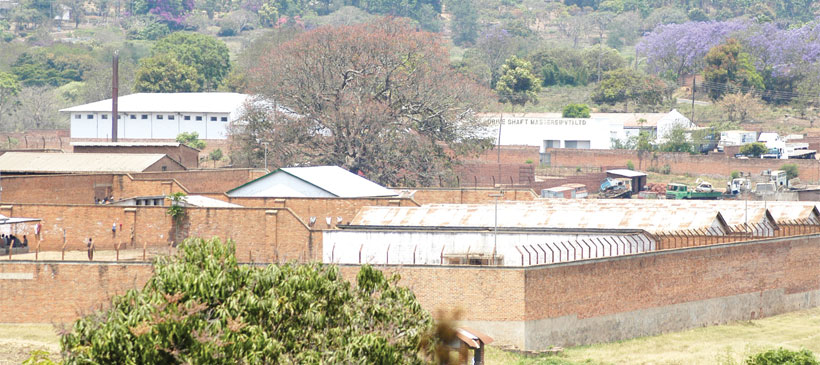

When Michael Nyirenda (not real name) first entered the gates of Nkhata Bay Prison in 2015, after being convicted for house-breaking, the word punishment lingered on his mind.
Nyirenda never understood what a prison warder meant when he was briefing him on his prison tenure.
“The warder told me that I would be here for 72 months [six years] and that, during my stay I would be undergoing various reformatory courses.
“I failed to understand what he meant by reformation as all I knew was that prisons are punitive formations for those on the wrong side of the law,” he says.
Nyirenda says during his early days at the prison, he, together with fellow inmates, would be taken to a nearby garden where they cultivated vegetables and sugarcanes.
“We would sometimes go to the garden in a group of 30 inmates to till and water vegetables. There wasn’t much work there as most of the times we were just chatting and sometimes collecting sand from the lake for sale.
“However, things changed when, towards the end of 2015, authorities informed us that they had secured a big [piece of] land which we were to use for cultivating maize on a large scale,” he explains.
Nyirenda says life became harder as inmates could now spend several hours working on the five-hectare maize field at Nkondezi, unlike in the past when the prison only had a vegetable garden nearby.
“At Nkondezi farm, I have experienced serious reformation because we have learned how to grow maize extensively,” he says.
Nyirenda says the introduction of extensive maize farming has widened his knowledge.
“We are taught modern farming practices which promote the use of hybrid seeds and pesticides. We have also learned farm management. We are exposed to real commercial farming as we do everything, from tilling the land to harvesting our maize.
“I can assure you that by the time I will be moving out of this prison later this year, I will be a changed person. I’m determined to apply the knowledge I have acquired here to my gardens,” he says.
NkhataBay Prison spokesperson, MacDonald Migolo, says the maize project, which the prison implements in collaboration with the district’s health office (DHO), has proved a success.
He says, apart from boosting food stocks at the 280-capacity prison, the farm project has helped in the reformation of prisoners to become financially independent by engaging in agribusiness.
“For the three years, we have been producing high quality maize which we believe will inspire prisoners to practice the same when they finish serving their jail terms,” Migolo says.
He explains that the project has helped authorities save public resources as inmates are able to feed themselves.
“The maize farm has enabled us to lift the burden that government always shoulders in feeding prisons. For instance, last year we got over 300 50-kilogramme bags of maize, which helped us to stand on our own for some months,” Migolo says.
In their project arrangement, Nkhata Bay Prison provides labour through inmates while the DHO contributes money for buying farm inputs such as maize seed, fertilisers and pesticides.
Proceeds are shared equally between the two public institutions.
The DHO uses the maize to feed in-patients at Nkhata Bay District Hospital, which in 2013 experienced acute food shortage.
The hospital failed to feed inpatients for over a week and the situation was worse for patients who had no guardians.
Foodstuff suppliers had stopped supplying items to the health facility due to outstanding debts.
So, the project was initiated, as a long-term solution, in 2015.
The then district health officer, Albert Mkandawire, said both the prison and the hospital stood to benefit from the arrangement.
He said the maize realised from the project would improve patients and inmates’ nutrition status.
National prisons spokesperson, Julius Magombo, says there are other prisons in the country who are practising extensive agriculture apart from Nkhata Bay. These include Rumphi, Mpyupyu, Matchaya and Nsanje.
Magombo says the decision to venture into extensive agriculture has seen the prison department improving inmates’ nutrition.
“Apart from training inmates in modern agricultural skills, we have seen a vast improvement in inmate’s nutrition status as prisons are now able to feed themselves with what they produce,” Magombo says.— Mana
Leave a Reply