
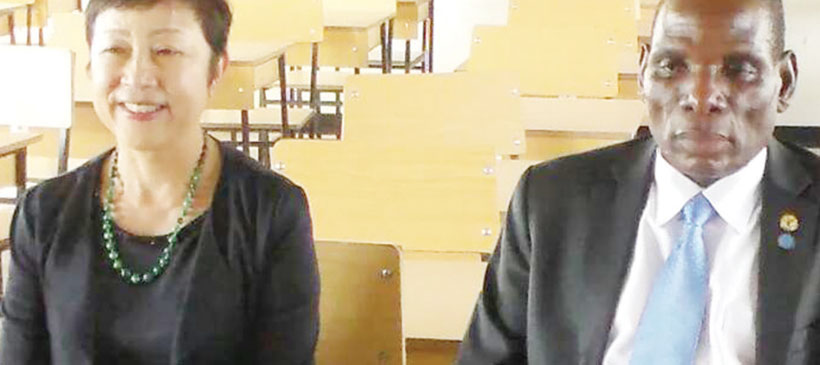
The Japanese government has pledged more support towards the education sector in the country, singling out rural areas.
The call was made when Japanese Ambassador to Malawi, Kae Yanagisawa, handed over Chikangulu Secondary School to Chiradzulu West constituents.
The school was constructed by the Chiradzulu District Education Office (DEO) through Japanese government grant assistance for Grass-roots Human Security Project amounting to $113,984.
Yanagisawa said education is key to the economic development of countries.
“With these new school facilities, boys and girls of this area will benefit not only by covering a shorter distance [than before] to school, but by having enhanced safety on their way to school, particularly girls.
“This project will, however, not be fully completed unless qualified and dedicated teachers are assigned to the school,” she said.
Yanagisawa further urged the Ministry of Education, Science and Technology and Chiradzulu DEO officials to ensure that Chikangulu gets motivated teachers who will promote quality education.
“We are aware of good indications in the 2018/19 financial budget and I do hope Chikangulu will benefit from it. Our plea is that the community here should take good care of these facilities so that they remain in good condition and be used by many boys and girls in generations to come,” Yanagisawa said.
On his part, Member of Parliament for the area, who is also Minister of Agriculture Joseph Mwanamvekha, said, through the school, access to education in the area will become a reachable target.
“At this secondary school, thousands of Malawian youths will take their first steps towards becoming lawyers, doctors, engineers, teachers, social workers, security officers and business persons.
“You saw, first hand, the phenomenal distances that our children, especially the girl-child, had to endure to access secondary education. You also saw the increasing school drops out rates; circumstances of early marriages and a vicious cycle of poverty from which they could not break out,” Mwanamvekha said.
Mwanamvekha said community members would take good care of the facilities.
Leave a Reply