
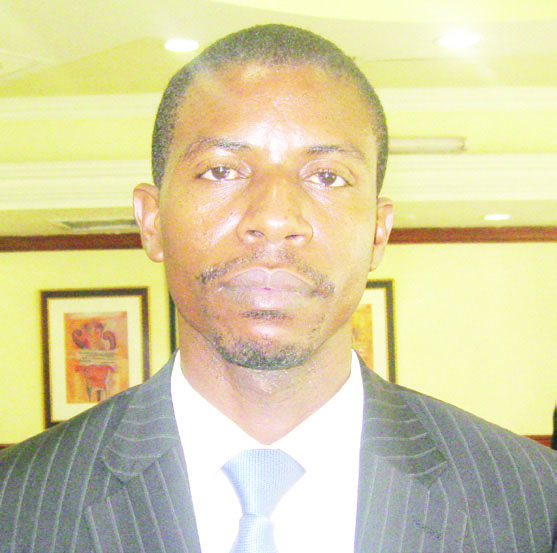
Ellen Phiri’s gloomy face is a manifestation of her miserable situation. Even without uttering a word, a mere glance at her tells the story of the agony she is passing through.
Ellen’s dry lips are a reflection of the constant challenge of lack of food.
“I mostly go to school without taking any food,” said the 13-year-old, who spoke to us after her grandmother gave us permission to interview her.
Food is vital to learners as it enhances their concentration in class.
But, then, even an empty stomach is not a convincing reason for Ellen to stay away from school as she often attends classes regardless of whether food is available or not.
However, on top of an empty stomach, Ellen has to cover about four kilometres from her village to Chipanga Community Primary School in Traditional Authority Kanyenda, Nkhotakota, in search of education services.
She does that from Mondays to Fridays. As Ellen seems unmoved with obstacles standing in her way to a bright future, the challenges are not relenting. The odds want her down and defeated, or so it seems.
Ellen looks up to her ageing grandmother for support as, after her father became mentally disturbed and her mother remarried— and stays in Likoma— she had no one to lean on other than the granny.
With farming as the only source of income for the granny to take care of Ellen and three siblings, life has become unbearable.
The grandmother said she is at pains to see Ellen and her siblings mostly going to school without taking any food.
“I always try that the children should eat something when going to school but I have nobody to support me and I feel bad seeing them going to school without eating anything. But I have no choice,” the helpless grandmother, commonly known as Anyabanda, said.
She further said Ellen is hard-working and rarely misses classes. But, no matter how hardworking and school loving Ellen is, the challenges seem too numerous for her to surmount.
Even after braving the long distance to school amid persistent food challenges, all her efforts are thwarted by lack of writing materials. At the time of the interview, Ellen had no exercise book.
“I filled the space in my only exercise book last month and the grandmother told me to wait until she gets money to buy one,” Ellen said.
For a month, Ellen could not write in class because she had no pencil and exercise book, which both cost not more than K100. Ellen is just an epic example of how lack of writing materials continues to negatively affect vulnerable learners, especially those from the rural areas.
Every parent is charged with the responsibility of ensuring that they provide for their children.
However, children are always at the receiving end of circumstances that befall their parents.
Head Teacher at Chipanga Community Secondary School, Monica Chipwaila, said their job is made tough by pupils who lack writing materials.
“Some parents and guardians are too poor to provide their children with writing materials. We have several pupils who come to school literally without an exercise book or a pencil. Concerned with the situation, we, teachers, sometimes contribute money to buy exercise books for some needy children,” Chipwaila said.
In 2012, the government decentralised the system of distributing exercise books to schools by introducing School Improvement Grant (SIG) Programme, to be managed at the district level.
The key dimension of this initiative is to promote equitable access and quality. The programme provides funds for district-approved school improvement plans such as rehabilitation of school infrastructure, procurement of teaching materials and other activities.
With the programme poorly and intermittently funded, the distribution of exercise books in most schools has stalled, denying underprivileged children such as Ellen the chance to get access to quality education services.
Most schools, such as Chipanga, receive—basing on enrollment—not more than K600,000 per year, an amount way below the mark of making a positive impact.
“The money (SIG) is not adequate. We have to use the money to rehabilitate school infrastructure and buy learning materials. Worse still, the money is not reliable as sometimes we are funded and sometimes we are not. As such, needy pupils cannot bank their hopes on the funds,” Chipwaila said.
While in some schools such as Chipanga, the challenge is intermittent funding, other unscrupulous school authorities have found gold in the money.
In one of the Nkhotakota District’s full council meetings, Everson Makowa-Mwale, who is legislator for Nkhotakota South-East Constituency, last year said it was a concern that SIG funds are being abused but people only talk of Constituency Development Fund as the most abused.
Civil Society Education Coalition (CSEC) Executive Director, Benedicto Kondowe, said if SIG is to achieve its intended purpose, government has to ensure that schools are being timely and adequately funded.
“The idea to come up with SIG was not bad but there are few areas that need to be worked out so that this initiative succeeds. For example, there are reports that funding to most schools is not enough to meet even a quarter of what they are meant to achieve. So, in such instances, you cannot expect the provision of exercise books to be prioritised to needy students,” Kondowe said.
Spokesperson in the Ministry of Education, Science and Technology, Lindiwe Chide, said SIG was meant to cater for the most disadvantaged learners.
“The grant enables school authorities to meet other requirements within the school such as renovation of school infrastructure and the purchase of teaching materials. The grant is also used to support the most vulnerable children at the school. It only acts as a relief for the children and cannot address all their challenges. It remains the responsibility of parents to make sure that they provide for their children,” Chide said.
In its report published in March last year, The Public Expenditure Tracking showed a lot of discrepancies in the management of SIG.
CSEC, in partnership with Mzimba District Education Network (Mziden) , conducted the survey.
Mziden Chairperson, Teckson Amadu, said, for example, the report showed that out of 301 schools that received the grant, only 238 got the exact amount while 63 received less than the K600, 000 which is the base rate amount.
While the introduction of SIG is a tremendous step in the implementation of the Decentralisation Policy, for vulnerable children like Ellen, what does the future hold? As Ellen’s parents deserve the blame for running away from their core responsibilities, where else can she get help if the government cannot come to her rescue?
Leave a Reply