
The Legal Affairs Committee of Parliament has lamented the decision by the Malawi Electoral Commission (Mec) to shift the comprehensive constituency demarcation exercise to 2020.
The decision to push demarcation exercise to 2020 is contained in the statement that Mec presented to the committee on Thursday last week.
The committee has observed that it is wrong for the electoral body to continue entertaining the disproportionate sizes of constituencies for additional years even after receiving K300 million in the 2015/2016 budget and K500 million in the 2016/2017 budget for the exercise.
According to 2014 election figures, the largest constituency in terms of registered voters was Lilongwe City Centre with 126,115 while the smallest was Likoma Islands with 6,933. On average, each of the 193 constituencies was supposed to have 38,770 voters.
Lack of reliable information on population of eligible voters has forced Mec to shift its planned comprehensive constituency demarcation exercise to 2020 against the initial plan to conduct the exercise after the May 2014 Tripartite Elections.
The Constitution states that with regard to constituencies, the review should take place at intervals of not more than five years.
But the only time Mec conducted the exercise since 1993 was in 1998 and even then it considered constituencies that were very large on the understanding that a full exercise would be conducted after 1999 general elections.
Chairperson of the Mec Electoral Services Committee, Commissioner Jean Mathanga, told the committee that the only source of population of eligible voters is the national census and, unfortunately, the census was conducted in 2008 and the figures that would have been provided are estimates.
The law requires Mec to use population of eligible voters and not registered voters for demarcating constituencies.
“The commission, therefore, made a resolution to shelve plans for comprehensive demarcation exercise to 2020 because the comprehensive demarcation process needed reliable data on population density of eligible voters.
“Only a national census can provide this data. Considering that the national census will be conducted in 2018, the commission decided to shift the exercise to 2020 in order to utilise most recent data from the census,” Mathanga said.
Section 76 of the constitution provides that among other duties and functions of electoral commission is the determination of constituency boundaries which should be done impartially on the basis of ensuring that constituencies contain approximately equal numbers of eligible voters to register.
This, according to the constitution, is subject only to the considerations of population density, ease of communication, geographical features and existing administrative areas.
Mathanga, however, said in preparation for the 2019 Tripartite Elections, Mec conducted a boundary realignment exercise between March 13 and 27 this year.
The exercise, according to Mathanga, was aimed at getting proposals from the councils on areas with overlaps or unclear boundaries and need refining or realignment.
During the period, the commission reviewed, confirmed and received requests for the introduction of new registration centres ahead of 2019 Tripartite Elections to bring elections closer to the people.
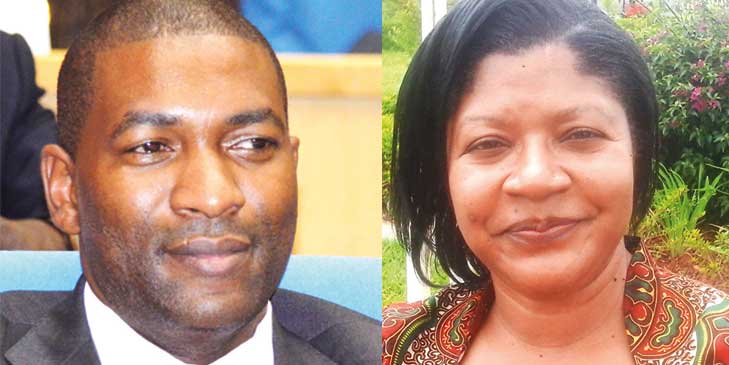
Chairperson for the Legal Affairs Committee of Parliament Maxwell Thyolera said the shift is unfortunate considering the funds that Parliament already approved for the exercise and the glaring differences in population size of constituencies against the constitutional provision of equal population constituencies.
“We provided funds in preparation for full demarcation exercise not realignment of boundaries. Basically, we need to have equal population figures in constituencies to ensure equal distribution of resources and not very big constituencies and very small constituencies as is the case now,” Thyolera said.
He mentioned the unfairness in the administration of the Constituency Development Fund, currently at around K25 million, which is shared equally among constituencies that have glaringly different populations.
Leave a Reply