
Lilongwe residents should brace for the worst following a decision by two influential donors, the African Development Bank (AFDB) and International Development Association (IDA), to withdraw their support in Lilongwe Water Board projects.
We have learnt that the donors have pulled out due to risk levels associated with the resettlement action plan.
Malawi News has learnt that AFDB and IDA withdrew their support in November and December 2016, respectively.
AFDB withdrew from the priority distribution network investment because of headroom in terms of financing with the Government of Malawi. IDA was supposed to invest in the Diamphwe Dam Water Supply project.
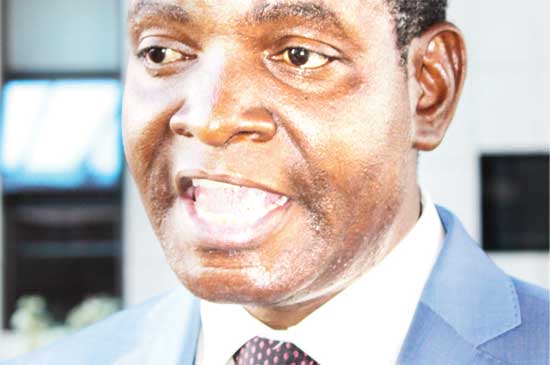
“The distribution network would be the backbone for distributing any additional water. IDA withdrew due to high risk levels in the resettlement action plan of the affected people which included graveyards,” said LWB Chief Executive Officer, Engineer Alfonso Chikuni.
He said investment in the Diamphwe project has collapsed for now, and further cast doubts over the possibility of remobilising the communities at a later date.
“Investment in Diamphwe, just as any other river now [with the current population density], has inherent risks in huge and complicated resettlement programmes.”
“Even if the investment in Diamphwe would kick off, the latest it would be commissioned would be in [the] year 2023. Meanwhile, the water challenges in the City would become unmanageable,” Chikuni said.
He said the Lake Malawi programme can be exploited in the shortest term to meet current demand and future supply needs in lean times when the rivers dry up.
Chikuni admitted that LWB conceptualised three Programmes— Lilongwe Water Resource Efficiency Programme (LWREP), Lilongwe Water Supply Programme (LWP) and Lake Malawi Water Source Programme— to address the current water problems on long term basis.
Chikuni said even though financing agreement (between the European Investment Bank and Government of Malawi) on the LWREP was signed in June 2015, there has been no physical progress and no disbursements have been executed in one-and-a-half years.
The project development objective was to meet water demand up to 2022. The project is worth Euro24 million.
The LWP (worth $395 million), a catalytic investment in the Diamphwe Multipurpose Dam, was going to be carried out through financing from IDA.
The third project is Lake Malawi Water Supply Project, whose objective is to provide security of water supply based on the climate variability trends.
Chikuni said an engineering procurement and construction contractor was identified in December 2016, adding: “Effectiveness is dependent on issues, which include finalisation of financing arrangements. General abstraction approval from the Department of Environmental Affairs has been obtained”.
There is a growing water demand and LWB is forced to rely on water sources that are located far away from the city.
The current production capacity is 36 million cubic metres per year, against demand of over 40 million cubic metres per year.
LWB says Lilongwe city population is pegged at one million, with the urban population of the city set to double over the next eight years.
Leave a Reply