
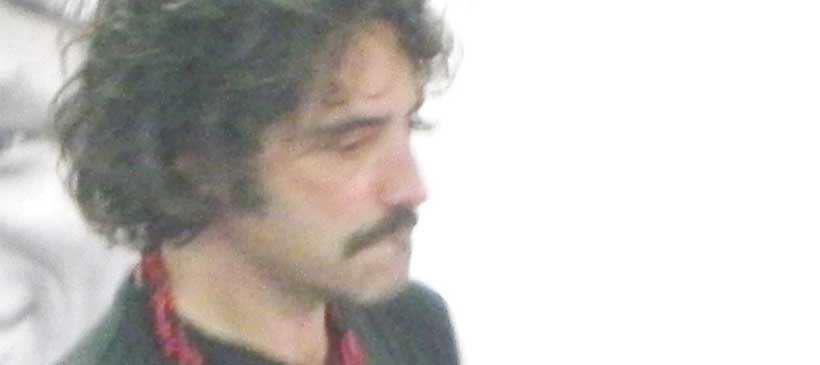
His name might bear some resemblance to legendary U.S. artist, Robert Sussman, who has made art lovers merry or sad for more than four centuries.
He may, perhaps, ressemble Sussman more closely because they both have lived in New York at some point. Sussman was born in the Bronx, New York, in 1943 and Rob was born and grew up in the same city.
But, unlike Robert— the Rob who is in Malawi is his own artist.
Rob’s figurative works reflect the products of a man who creates works according to the dictates of his mood.
“I have been in art since I was young. This has helped me realise that children can make expressions real and own emotions,” said Rob.
Rob, who lives and works in Los Angeles, said he was impressed with the levels of skill and artistic awareness among the children he has been drilling in Malawi.
He said exposure could help take local [Malawi] art to the next level, observing that it is important to create an enabling environment for those who feel that they were meant to be artists.
Rob, who, like Robert, was born and grew up in New York, holds a BFA with Honors in Illustration from Otis College of Art and Design, U.S..
His works have appeared in The New York Times, The Nation, Paper, The Progressive, LA Weekly, The Village Voice, New York Press and The NY Times Book Review.
The artist observed that, although the favourable academic environment in the U.S. pushes those with artistic inclinations to the right learning institutions that specialise in art, there was no difference, in terms of talent, between artists in his native country and countries such as Malawi.
However, it can be said that academic opportunities may offer artists in countries such as the U.S. a horde of opportunities. A visit to Otis College of Art and Design website revealed, for example, that learners are exposed to a range of courses, including history of public strategies in art, field methodologies for artists, among others.
In fact, Otis is ranked tenth in the U.S. by The Economist.
So, maybe, Rob just wants to placate us; making us feel comfortable in our uncomfortable position.
Nevertheless, Rob opined that other people are simply meant to be artists, observing that art cannot be surpressed. He suggested that, even when suppressed by, say, resource constraints, a real artist will always find a way and moment of genius, even when using non-professional materials.
This, in a way, renders weight to the words of William James (1842 – 1910)— who set up the first laboratory in experimental psychology in America in 1874— who suggested in his thesis ‘Great Men and Their Environment’ that not all products of the brain are works of genius since some things are drawn from the “lower strata of the mind, so to speak— from the sphere of its least evolved functions, from the region of intelligence which man possesses in common with brutes”.
Rob elaborates:“For example, once I helped the Malawian children understand the concept of figurative work, I was amazed with the diversity of works they came up with; the emotional variety of their paintings was impressing,” said Rob.
These children must, no doubt, fit the description of geniuses.
Leave a Reply