
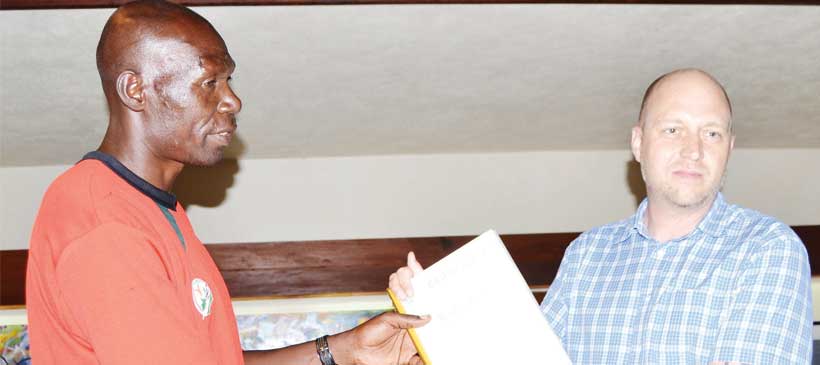
Malawi National Football Team’s inconsistency—evidenced by the chopping and changing of coaches—reflects the country’s general mentality, Germany Ambassador to Malawi has observed.
Peter Woeste called The Daily Times Tuesday to comment on our sister paper, Malawi News’ back page lead story published over the weekend under the headline ‘16 coaches in 16 years’.
“Football reflects many of Malawi’s problems. In other disciplines, we train someone in Germany and when they come back, they are moved two months later. There is no consistency,” Woeste explained.
“Football reflects the mentality of the nation. You have had 16 coaches in 16 years, but in Germany we have had 10 coaches in 90 years. The current coach [Joachim Low, World Cup-winner] was employed in 2006.”
Since 2006, Football Association of Malawi has hired and fired Kinnah Phiri, Stephen Constantine, Kinnah, Eddingtone Ng’onamo, Tom Saintfiet, Young Chimodzi, Ernest Mtawali and now caretaker Nsanzurwimo Ramadhan.
The Malawi News article established that Ramadhan, who was appointed to step in for his sacked boss Mtawali, is the 16th coach since 2000, a worthwhile trophy. Poor funding and infrastructure also affect the Flames.
“Quite frequently, we sponsor the training of Malawian coaches in Germany. The moment they come back, they are not utilised. For example, where is Leo Mpulula? This is one of the things that the country needs to change. Coaches need time, patience and continuity,” Woetse added.
Ironically, Mtawali— who leaves the post after six defeats, five wins and four draws in nine months, is among the coaches the Germany government has trained alongside Mpulula, Patrick Mabedi, Derklerk Msakakuona (Blue Eagles), Audlo Makonyola (Epac) and late Dave Mpesi.
Annually, German Football Association hosts a three-week international coaching course for participants drawn from Africa, Asia and Central and South America, leading to A and B licences. German Manfred Hoener is also credited for grooming most Malawian footballers.
Malawi has over 60 coaches boasting Caf-A [the highest badge in Africa] and B licences, but most of them are not attached to mainstream football institutions. Most clubs prefer hiring their former players. Msakakuona is among few coaches employed by the same club for over three years.
Leave a Reply