
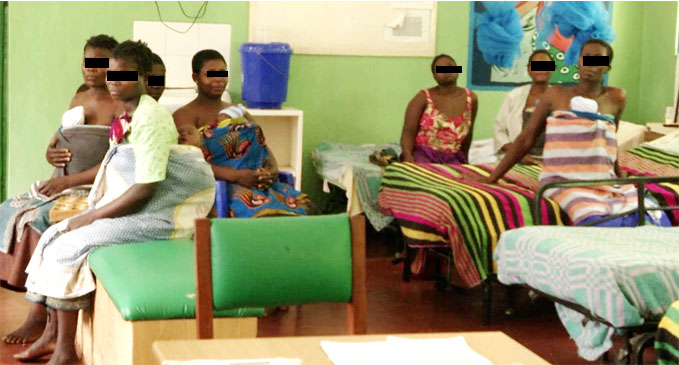
As Members of Parliament were demanding a pay rise in parliament last week, Susan, a patient admitted in Ward 5B at Queen Elizabeth Hospital (QECH), could not be operated on because of the shortage of Thiopentane and Propofol drugs which are used before operating procedures in the theatre.
But even if the hospital found the drugs, Susan may still not be operated on because the hospital also has the shortage of Anaesthetists – experts that administer the pain relief drugs in the theater.
While Susan and other patients were going through this ordeal, MPs were mounting a protest against Finance Minister Goodall Gondwe demanding that he increases their allowances from K60,000 per day to K80,000.
Gondwe buckled under pressure and accepted their demands since the passing of the budget was at stake. Sitting allowances have been raised from K15,000 to K20,000 per day and subsistence allowance from K45,000 to K60,000 per day.
This is money enough to make a difference in Susan’s life and many other patients on waiting list to be operated on.
The Sunday Times understands that QECH has 20 operating theatre rooms against only eight Anaesthetists.
The hospital has 30-50 planned operations per day, of which about 50-60 per cent of those are done; so with the current shortage of drugs, only a few emergency operations are being done, a miracle for those who find themselves on the operating table.
“I was admitted at ward 5B on Tuesday in preparation for the operation that I was going to have on Wednesday. But whilst in the ward I heard that others had been sent back due to shortage of medication and theater staff… I was told the same things when it was my turn. I was told to go back on July 4, 2018 because the drugs may be available on July 3, 2018,” lamented Susan.
For the past two weeks, patients like Susan, in need of elective surgery at Queen Elizabeth Central (QECH) are not being attended to because of the shortage of Thiopentane and Propofol
We learn that QECH has been sourcing the drug(s) from surrounding public district health facilities who are less overwhelmed but the situation is getting out of hand with each passing day.
QECH Spokesperson, Themba Mhango confirmed these developments. He said the hospital has been waiting for the supply from Central Medical Stores Trust (CMST) for the past two months.
“We have been surviving on supplies from our sister public hospitals but since two weeks ago, we have been sending people back because our colleagues have also run out of stock of Thiopentane and Propofol drugs,” Mhango said.
Insiders at the hospital say people have died because of the failure by the facility to operate on some cases. But could not, also, independently establish the number of people that have died at the facility because of the shortages.
This means that the operations of the facility, which is a referral hospital for Blantyre and Chiradzulu, Thyolo, Mulanje, Chikwawa, Nsanje, Mwanza, Neno and Nsanje have been limited to emergency cases depending on the seriousness of the situation.
Mhango has also confirmed the acute shortage of Anaesthetists for over a year.
“We have been using the same few Anaesthetists on Locam but they are too overwhelmed. The immediate solution could be using staff from the nearby public health facilities on Locam but such need to be paid their K4, 000 on the spot which is not possible,” Mhango disclosed.
CMST failed to explain to us why it has not been able to supply Thiopentane and Propofol to QECH and other public health facilities.
Public Relations Officer for CMST, Hebert Chandilanga had not responded to our questions as we went to press.
Ministry of Health Spokesperson, Joshua Malango said the ministry is aware of the shortage of drugs and Anaesthetists at QECH and other public health facilities.
“It’s very unfortunate that patients are being sent back due to this shortage…The CMST should be in a better position to explain why they have not been able to supply the said drugs on time,” Malango said.
He said that health facilities submitted the orders and are just waiting for the supplies.
“We are only allowed to buy our supplies from them that’s why we are waiting upon them,” he said.
On the issue of shortage of Anaesthetists, Malango said QECH wrote the ministry about the issue and the ministry has hired 2,000 health workers including Anaesthetists, some of whom will report for duties in July.
Malawi’s health services have, in the last few years, suffered brain drain and neglect, under funding to say the least. The worst victims of the inefficiencies are poor women and children.
Leave a Reply