
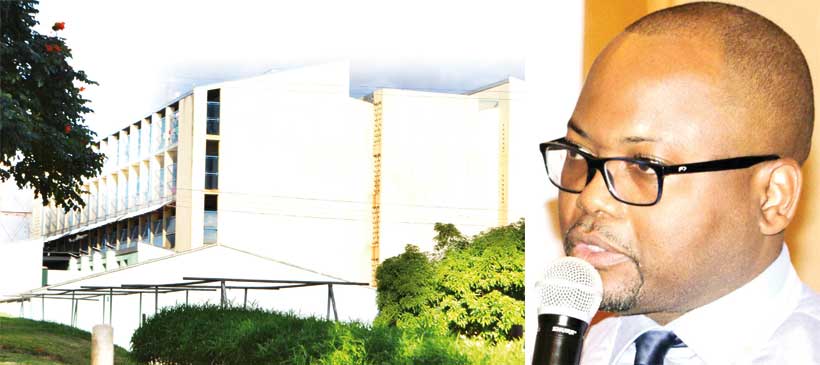
The country’s central hospitals are full of middle men that are cashing in on patients’ desperation to get treatment, Malawi News can tell.
This practice is rife at theatre, laboratory, radiology and pharmacy departments of Kamuzu, Mzuzu, Queen Elizabeth and Zomba Central Hospitals.
Officials from the hospitals (except Zomba) have acknowledged the existence of such deeds but say the victims are complaining to the wrong people and platforms.
Public hospitals usually have a high demand for services because they offer them freely and there are mostly long queues for one’s turn to come. The middlemen are taking advantage of this by assisting people to jump the queue at a fee.
The middlemen are not government employees but are conniving with employees of the institutions.
At KCH, they are all over the place, so much that when they see people getting on a queue to get a service, they swamp the patient and guardian(s), grabbing their health passports and offering to help.
Their charges depend on how they perceive the capabilities of the person they are dealing with.
A Lilongwe based man (whom we have identified as Gift) testifies that the middlemen behave the same way as minibus callboys.
He was asked to pay K200, 000 in order for his brother, who had an accident, to be operated on.
“He had an accident in Nkhotakota and was referred to KCH. He had an injury on the collarbone and the arm and required an urgent operation which was delayed for unknown reasons. A man approached us and offered to help fast track everything. He demanded K70, 000 at first.”
“We were so desperate. At Nkhotakota we were told that if an operation is not done faster the arm may rot, so we were prepared to pay. I told him that we will pay after the operation which was scheduled for 9pm,” he explained.
Later in the day, the middleman told Gift that there were many people involved and he needed K150, 000 instead, “A few minutes later, he changed tune and demanded K200, 000.”
“I believe that he had seen the potential that I would pay. I then decided to negotiate with my brother’s employers to take him to a private hospital which we did. He had a successful operation at Beit Cure a few days later,” he said.
Another Ntchisi based woman (name withheld) also paid K70, 000 to have an operation done on her leg after she was involved in a fatal road accident.
KCH Director Jonathan Ngoma confirmed that the practice is rife at the hospital.
“We are aware of this issue. I must admit that it’s difficult to deal with it. The victims just complain without lodging official complaints. No victim has identified the perpetrators for us to deal with them. But it’s possible that our staff are involved but who are they?” he wondered.
Ngoma further disclosed that his office is aware that people are also being asked to pay bypass fees to certain individuals but no receipts are issued.
He observes: “If the middlemen are here, it means there are customers. People who pay believe that someone has done them a favour because they were desperate. This is creating a bad image for our hospital. You (media people) please help us to root out these people.”
At QECH, the practice is particularly common at the laboratory, theatre and radiology.
Chief Hospital Administrator for QECH, Themba Mhango confirmed of the malpractice.
“It’s difficult for us to act, unless we receive an official complaint. The issue of middlemen is the one that is also attracting bogus doctors. They get lots of money through these deals,” he said.
At Mzuzu Central Hospital, clinical officers are lying to people by telling them that operations cannot be performed due to shortage of drugs like anesthesia. But when desperate patients offer to pay, they are assisted.
We have established that drugs that are in short supply are available to desperate patients that are willing to pay.
But Hospital Director for Mzuzu Central, Frank Sinyiza, said he is not aware of this.
“I’m only aware of Ministry of Health’s circular which we received some months ago, warning officers against this practice. It also encourages the public to report to hospital officials or the police,” he said.
We also have reports on the existence of the practice at Zomba Central hospital but we could not get the hospital’s side of the story, as the facility’s Chief Hospital Administrator, Thom Chisale’s phone went unanswered.
Health rights activists have said this practice is silently killing people and undermining the right to health, especially for those that cannot afford.
Executive Director for Patients and Community Welfare (Pawe), Amade Alide said it is surprising that the health system is allowing such operations.
“This is an indication that insiders are involved. Whoever is approached by these people should act by confronting the perpetrators in public. People should take an initiative and record such conversations,” he said.
Executive Director for Health and Rights Education Programme, Maziko Matemba said his organisation received four complaints last month, where people were asked to pay money at public hospital mortuaries.
“They were told that this money was for buying some embalming chemicals. The fact that you [the media] are bringing up the issue is a wakeup call for Ministry of Health to enhance its monitoring and do serious investigations,” he said.
Director of Health Services in the Ministry of Health, Charles Mwansambo, said all hospitals are for free and the services are provided on equity basis.
“It is illegal for the middlemen to be operating within our facilities let alone connive with officers. It’s torture for very sick and desperate patients to be charged for services that are supposed to be free,” he said.
Mwansambo said the ministry has also received reports about some junior officers asking accident victims to pay for Plaster of Paris (PoP).
“We also received some reports that ear, nose, and throat patients at KCH were asked to pay for procedures which are offered for free,” he said.
In 2014 our sister paper, The Daily Times exposed some health workers who demanded money from expectant women by instilling fear in them, promising to give them extra care.
The women were told to pay K5, 000 per every antenatal visit and amounts ranging from K30, 000 to K100, 000 for C-Section deliveries.
Leave a Reply