
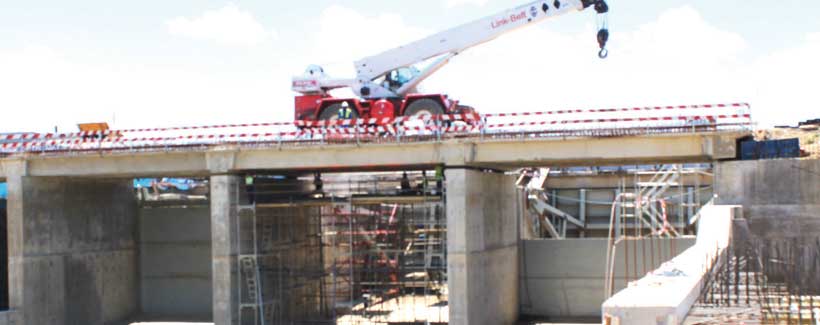
The second phase of rehabilitation works of Kamuzu Barrage at Liwonde has kicked off, with the government optimistic the project would finish by mid-2018.
In an interview on Friday, the government’s site representative, Toney Nyasulu, said delays by the civil works contractors and the mechanical engineering contractors had affected the original schedule of the project.
The civil works are being carried out by Conduril Engenharia S.A. of Portugal while the supply and installation of gates is being done by CMC di Ravenna of Italy. Norplan of Norway are overall supervising engineering consultants on the project which was initially anticipated to wind up by November 2017.
“The quality of the works has not been compromised due to the delays. We are done with phase one of the project and phase two [of civil works] has just rolled out. But the mechanical engineering contractors are doing final touches on the first seven gates which have been installed,” he said.
Nyasulu said the delays emanated from late mobilisation.
“After the completion of the project, the old bridge, which is also accommodating the water control gates, would be used by pedestrians. The gates, unlike the old ones, are automated although there is provision for manual control. Previously, everything was done manually. With this development, control of water levels would be easy and more effective,” Nyasulu said.
After completion, the barrage would have 14 gates.
Shire River Basin Management Programme Communications Specialist, Horace Nyaka, said the project is being implemented with funding from the World Bank.
“The Shire River Basin Management Programme focuses on development of the Shire River basin and its main objective is to lay the foundation for more integrated investment planning and for modernised system operations for the Shire Basin,” he said
During a media tour of the project on Friday, Nyaka and Nyasulu disclosed that the barrage project has offered employment opportunities to skilled, unskilled and semi-skilled people from the surrounding areas.
“The project also aims at reducing the downtime of hydro-power generation, therefore people will also benefit from sustained availability of power,” Nyasulu said.
Leave a Reply