
THE United States of America (US) government has asked its Ambassador to Malawi, Virginia Palmer, to justify US’s continued support to Malawi’s health and education sectors.
The development comes amid concerns that change in leadership in the US in January this year may jeopardise US-funded projects in the country.
Palmer confirmed the development in an interview.
She said she has been asked to explain whether US-funded programmes are bearing fruit.
“[The thinking is that] If Malawi is prosperous then it is a good partner to the United States and that means there are more opportunities for [conducting] American business. I think Malawi has got a very good story to tell. “You [Malawi] are peaceful, democratic and I see a lot of potential. I hope that we will see a lot more business back and forth between the country and the United States,” Palmer said.
Through the United States Agency for International Development (Usaid), the US is supporting two programmes in the education sector.
These are the $65 million Malawi Early Grade Reading Improvement Activity (Merit) and the $880, 000 Lakeland College Educational Partnership.
The Merit Programme, which is being implemented by RTI International in all primary schools in Malawi, seeks to improve reading proficiency in learners from standards one to four while the Lakeland College Educational Partnership seeks to help 20 language arts teacher trainers drawn from public Teacher Training Colleges in Malawi earn Master of Education degrees, according to information sourced from the Usaid website.
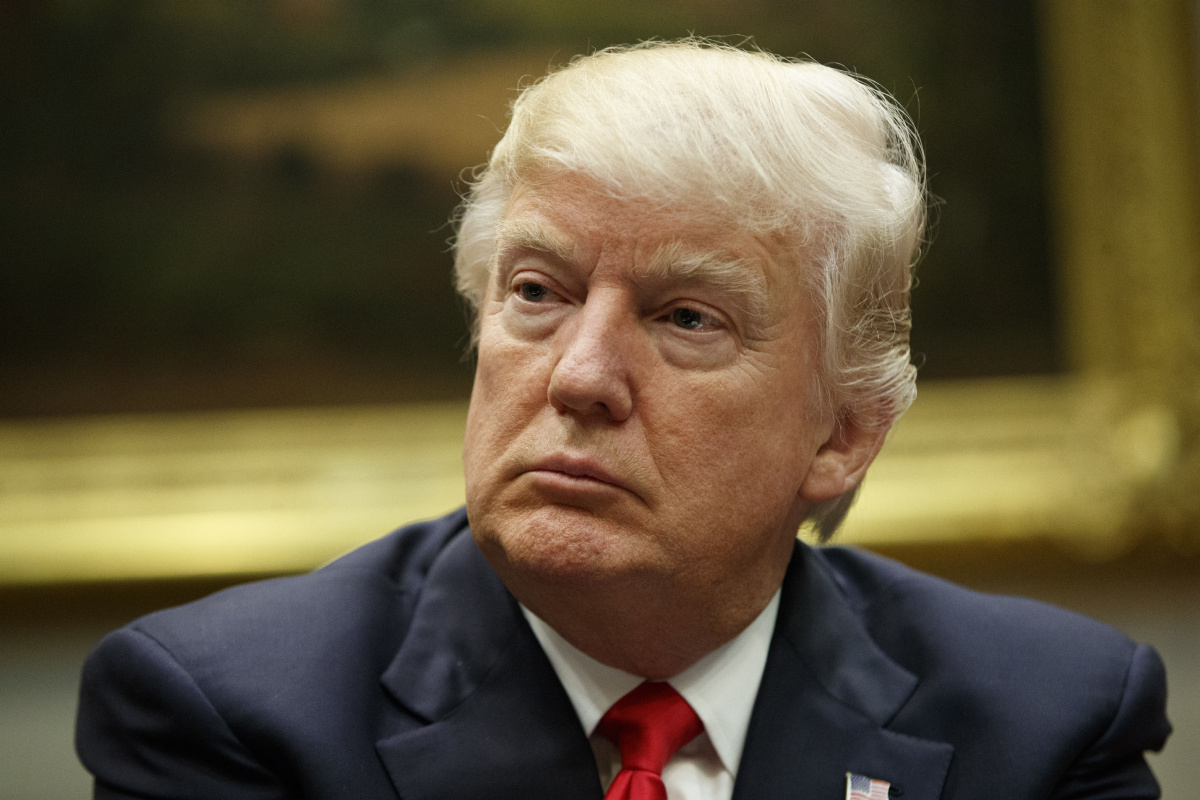
Since coming to power on January 20 this year, US President Donald Trump has made deep cuts to foreign aid, raising fears that Africa could be hit hard by such a move.
But Palmer said Malawians should hold their patience, observing that the US budget has not been finalised.
“The decisions haven’t yet been made. There have been some initial talks about the budgets to various ministries but it is too early to say and, in fact, ambassadors all over the world have been given instructions not to comment [on such issues] because the budget isn’t yet formalised,” Palmer said.
The US, which supports HIV programmes, is also funding Malaria programmes in the health sector through the Presidential Malaria Initiative which advocates reduction of malaria-related morbidity by 50 percent. Meanwhile, University of Malawi economist, Ben Kalua, has attributed Malawi’s uncertainty on US aid to insatiable “appetite” for donor aid.
“We should have positioned ourselves a long time ago. The problem is [that] our [the country’s] dependency on aid is just too high. We should have been reducing the dependency [levels] strategically,” Kalua said.
Minister of Finance, Economic Planning and Development, Goodall Gondwe, said in an interview that the government is in the dark about the new US administration’s policies.
Gondwe, therefore, said Malawi could not make its position known on the issue of US aid. “We do not know their policies presently. Unless we do [know the position], we cannot make our position [known],” Gondwe said.
Leave a Reply