
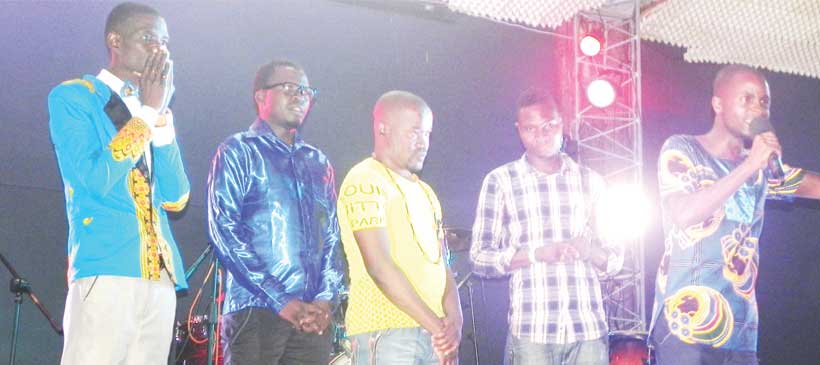
It is not often that poets find time to go before the mirror and reflect on the journey they, and not society, have taken to get to the moment they are in, the stage they are on.
Often, poets serve as society’s mirror, reflecting on things that have happened by way of pointing at wrongs and offering solutions.
But poets under the banner of Katambalale wa Alakatuli can be excused for leaving the story of society aside and telling their own story. This year, after all, marks the fifth anniversary of Katambalale wa Alakatuli, a platform for vernacular language poets. Sorry, not vernacular language poets!
“Katambalale wa Alakatuli is about poets, Chichewa written and spoken-word poets and English written and spoken-word poets. Just that, over the years, English spoken and written-word poets have been elusive. They are not willing to join our cause, except for one English spoken-word poet who has always been willing to be part of us.
“In the end, people have come to identify Katambalale wa Alakatuli with Chichewa spoken and written-word poets, which is not supposed to be the case,” said Mollen Nazombe, one of Katambalale wa Alakatuli’s organisers.
The other organiser is poet Kenneth Khondiwa.
Nazombe said the poets can be excused for focusing on their own story because it is not always that poets celebrate their success.
Khondiwa concurs.
“You see, we have been organising Katambalale wa Alakatuli since 2013. When we started, we had no idea that we would get this far. We have been supported by individuals, institutions and the poets themselves, who have been performing during our shows. It is not easy,” Khondiwa said.
Khondiwa added that five of the poets who performed during the first Katambalale wa Alakatuli show continue to perform, meaning that they have kept their faith in the organisers. Others, they say, have moved on—meaning that Katambalale wa Alakatuli has also served as a training ground.
On March 19, Katambalale wa Alakatuli organisers organised a fifth anniversary show at M1 Centre Point in Lilongwe.
Yesterday, it was the turn of Blantyre, where poets strutted their stuff at Mibawa Multi-Purpose Hall. Joseph Madzedze recited ‘Mayeso a ku Usilikali’, ‘Achikabudula’, ‘Changa Changa Ndiye Iweyo’, among others.
Others, the likes of Khondiwa, Nazombe, Wamtali Savala Gogoda, did their part too.
But it was Mibawa Band that kept patrons on their feet; for once, excusing them [the audience] from the task of listening to the poets. In dancing, they [the audience] became part of the performers.
Leave a Reply