
The World Bank on Tuesday raised its 2016 forecast for crude oil prices to $43 per barrel from $41 per barrel due to supply outages and robust demand in the second quarter.
The World Bank said in its Commodities Markets Outlook that the upward revision takes into account a recent softening of demand and the recovery of some disrupted supply.
The revision, though not very significant, should spell tough times for oil importing countries such as Malawi which have benefitted from low oil prices in recent months.
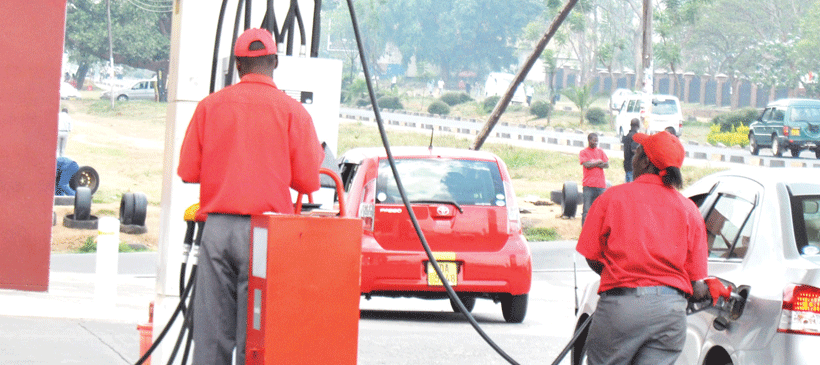
The oil price forecast revision by the World Bank comes barely less than two weeks after the Malawi Energy Regulatory Authority (Mera) board resolved against raising the price of petrol and paraffin despite the two commodities qualifying for an upward price adjustment under the Automatic Fuel Pricing Mechanism (APM).
Mera had to use the price stabilisation fund to prevent the price of petrol and paraffin from shooting up.
“According to the Automatic Fuel Pricing Mechanism, petrol and paraffin qualified for an upward price revision since the change in the landed costs was beyond the plus or minus five percent trigger limit.
“However, the Mera board considered the low premiums offered by suppliers in the 2016/17 supply contracts effective July 1, 2016 that resulted in lower landing costs for petroleum products,” said Mera in the statement.
Currently, a litre of petrol is selling at K788.30 while that of diesel remains at K766.90. Paraffin is selling at K609.80 per litre.
According to the Commodities Markets Outlook, oil prices jumped to 37 percent in the second quarter of 2016 due to disruptions to supply, particularly wildfires in Canada and sabotage of oil infrastructure in Nigeria.
World Bank Senior Economist John Baffes, who is also lead author of the Commodities Markets Outlook said they expect slightly higher oil prices for the second half of 2016 as oil market oversupply diminishes. The World Bank is expected to release a separate report on July 28, Whither Oil Prices?, which examines the fundamental changes in the behaviour of market players and whether the oil market will rebalance over the long term.
The report will also address whether the prospect of sustained, low oil prices will lead to a new social contract in the Middle East and North Africa region.
Leave a Reply