
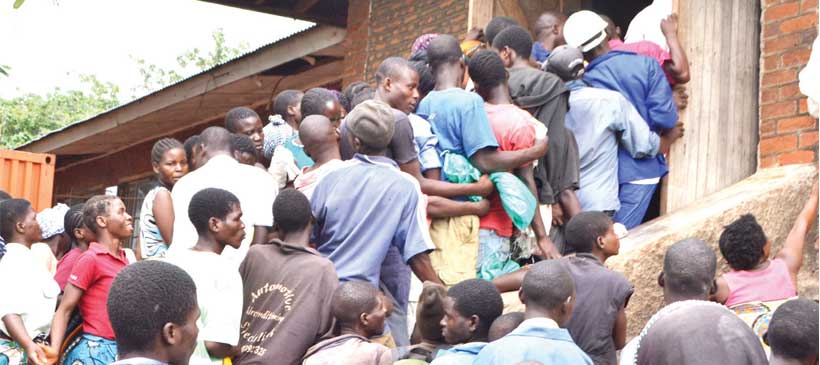
Acute food shortage, which the Malawi Vulnerability Assessment Committee (Mvac) says is going to affect 6.5 million people in the country, has attracted the attention of the United Nations (UN) headquarters with its Assistant Secretary-General and Deputy Emergency Relief Coordinator, Kyung-wha Kang, expected to visit the country from Saturday to Monday.
As of Thursday, reports indicated that government needs at least $395.1 million (approximately K282 billion) to optimally address the food shortage and so far, about $91 million has been provided through different pledges.
According to a press statement from the office of the UN Resident Coordinator, the visit enable the UN to have first-hand information on the current situation in the country, a development that will also create increased international awareness on food crisis.
“[Kang’s] mission to Malawi will help strengthen commitment from government and partners for leveraging of resources to scale up the response and increase investment in preparedness and early warning,” reads part of the statement.”
It adds that resource mobilisation alone cannot address the weather-induced food insecurity, but there is need for government and partners to collaboratively search for innovative and different ways of responding to the current crisis.
According to the Ministry of Agriculture, Irrigation and Water Development, winter cropping will address food shortage problems in the country.
During a meeting which he recently had with members of the clergy at Kamuzu Palace in Lilongwe, President Peter Mutharika said in the next four to five years, Malawi will be completely food secure as mid-term measures are being put in place towards achieving the goal.
While in the country, Kang will meet Vice President, Saulos Chilima, government officials, Non- Governmental Organisations (NGOs) and the diplomatic community.
She is also expected to visit one of the areas worst hit by drought.
According to the Mvac report, total humanitarian food assistance that is required for the 6.5 million food insecure Malawians, is estimated at the equivalent of 493,000 metric tonnes of maize
Leave a Reply