
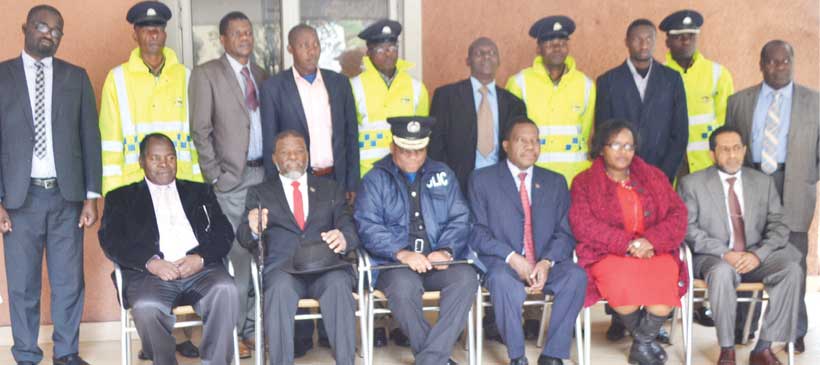
Experts involved in the pre-establishment consultations of the Independent Police Complaints Commission (IPCC) want the law that establishes the commission, the Police Act of 2009, amended to seal some shortfalls in the Act prior to the institutionalisation of the IPCC.
The last consultative meeting that the experts conducted on Monday at Victoria Hotel in Blantyre, feared if IPCC is operationalised without amending the Police Act, the independence of this civilian oversight commission will be heavily compromised resulting into a disservice to the nation.
A lead facilitator at the meeting, Timothy Chirwa, a legal expert from Chancellor College, said there are a few weaknesses with the Police Act of 2009.
“We have noted that the Police Act stipulates that the commission should have one commissioner. This is not healthy because one person can easily be influenced. We want the commission to have more commissioners for the sake of making it independent in making decisions as opposed to one person,” said Chirwa.
There were also reservations on the provision in the Act that the IPCC should be reporting directly to the Minister of Home Affairs.
They fear this will make the commission be at the whims of political interference and want the Act to be amended to enable the commission report directly to Parliament.
Another crucial thing in the Act is the funding of the commission which, according to the Police Act, the Ministry of Home Affairs is the main source of funds for running of the IPCC.
“We want the commission to have a separate funding that is also secured. This will ensure that its operations are not at the mercy of politicians or the bureaucratic tendencies in the Ministry,” said Chirwa.
Chief Director in the Ministry of Home Affairs, Often Thyolani, said the whole process of seeking peoples’ input prior to the establishment of the IPCC has been revealing.
“We have conducted the meetings in the North, Centre and we are finally here in the South. It has been more than two years of planning and consultations but the most crucial thing has been the independence of the commission. We all agree that the commission needs to be truly independent from any interference so that it discharges its duties according to law,” said Thyolani.
Commissioner of Police in the Southern Region, Demester Chigwenembe, who was one of the stakeholders at the consultative meeting, said the establishment of the IPCC is overdue for the harmonisation of the relationship between police and civilians.
If established, the IPCC will be investigating complaints against police officers, investigating death and injuries occurring from police work and death and injuries happening in police custody.
Leave a Reply