
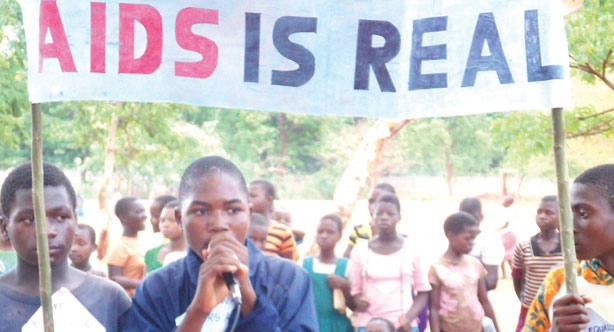
Malawi government is determined to implement a universal Antiretroviral Therapy (ART) regime targeting over one million people living with HIV but it is battling with availability of resources to undertake such a challenge.
Malawi is implementing the programme in accordance with the newly-introduced World Health Organisation (WHO) guidelines.
But the programme faces the challenge of economic problems and donor fatigue.
Malawi’s entire ART programme is funded by the Global Fund for Aids, Malaria and Tuberculosis.
Since the introduction of ART in 2003, only those whose immunity has gone down (350 cells/mm3 or less) are eligible for ART. This has been due to inadequate resources.
At the moment, it is not clear that the same Global Fund would support the universal treatment.
“We will be silent on the
donors and funding for now because in addition to The Global Fund, a few partners are coming in with varying amounts of support towards the initiative. We are thankful for this gesture,” said Ministry of Health spokesperson, Adrian Chikumbe.
The new WHO guidelines entail that ART should be initiated in everyone living with HIV at any CD4 count and that pre exposure prophylaxis (PrEP) should be administered as a prevention choice for people at substantial risk of HIV infection as part of prevention approaches.
Chikumbe disclosed that the ministry decided to prioritise universal ART strategy over PrEP come April.
He said PrEP requires a healthy, uninfected person to take ARVs every day for the long term, together with condoms and other prevention methods.
It also requires regular HIV testing and monitoring for adherence and side-effects.
Experience from other countries has shown that it is difficult to identify who will be at such high risk that they benefit from PrEP and to keep them in follow-up.
“We are in the process of revising our ART Guidelines. The new guidelines will be implemented from April this year (2016). One of the major changes in these new guidelines is the introduction of the test and treat strategy which means all HIV positive individuals will be universally eligible for ART. This will lead to better health of people who are HIV positive and will also reduce the risk that they may infect their partners,” Chikumbe said.
He further said it would take about six months to re-train and prepare all 720 health facilities with ART services in Malawi for this change.
The ministry says Malawi has led the world in the development of a more liberal ART policy for pregnant and breastfeeding women, known as ‘Option B+’.
In the last four years, about 115,000 women have been able to start ART under this policy in Malawi.
“Malawi’s experience has directly contributed to the 2015 WHO recommendation of starting ART without delay for all people diagnosed with HIV infection. The Ministry of Health is currently updating the National HIV Treatment guidelines that will include this new policy and Malawi will be the first country in Africa to start implementation from April 2016,” Chikumbe said.
Executive Director for Malawi Network of People living with HIV and Aids (Manet +), Safari Mbewe, believes that it was possible for Malawi to have universal treatment for all people living with HIV.
“This is the right thing to be done as everyone has the right to quality health. This is achievable and we are glad there is commitment at higher level. President Peter Mutharika even publicly committed to achieve this,” he said.
Mbewe added: “We, however, want to see actual policy and revise the guidelines. Government also has to solve the woes that exist in HIV treatment such as long distances to health facilities and inadequate health workers.”
He advised the government to consider finding a long term plan for drug supply other than relying on donors.
“It will become unethical for government to announce that they will no longer manage to give HIV medication because donors have pulled out,” he said.
Executive Director for Health and Rights Education Programme, Maziko Matemba, said Malawi can afford to have universal treatment if resources are allocated where it matters in HIV.
“Universal treatment is the way to go for Malawi as it is a right for people seeking care. It promotes equity to HIV care services. The current approach brings lots of inequalities of care to patients. Just that the new approach needs budget but in all fairness, that’s the duty of government to find resources for its people at all cost,” he said. .
There are over one million people living with HIV in Malawi and half of them are currently receiving the life prolonging ARV drug.
Leave a Reply